Why Your Toddler Can’t Stop Moving to the Beat (and Why That’s a Great Thing)

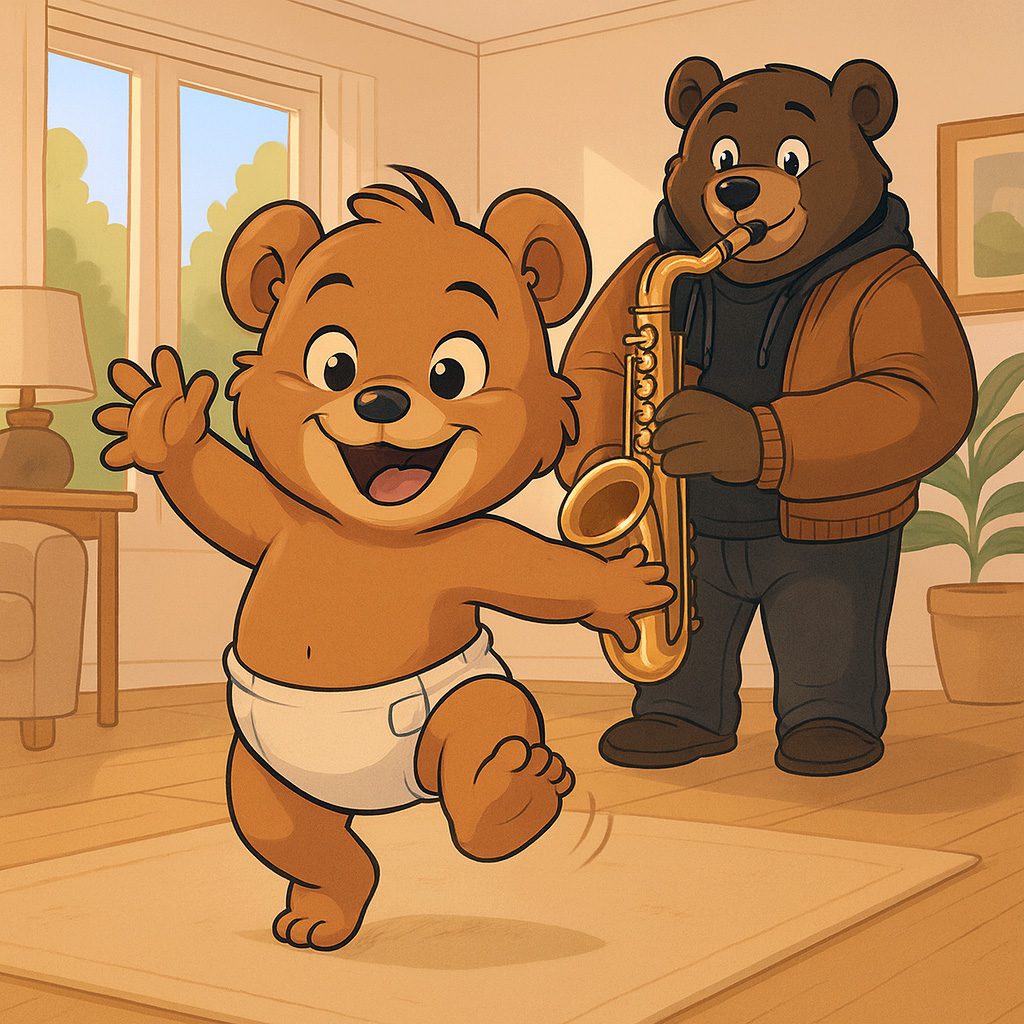
Kids don’t need to be taught to bob their heads. You’ve probably seen it already: a beat comes on, and your toddler starts bouncing before the first verse even hits. Maybe it’s a full-body wiggle. Maybe it’s that one-legged stomp thing they do that looks like a tiny person trying to start a lawnmower. Whatever it looks like, it’s real, and it’s happening for a reason.
We’ve been making music for little kids for a while now, and one thing we keep coming back to is how quickly they lock into a groove. Not a melody, not lyrics. The groove. That bass-and-drums pocket that makes grown folks nod their heads at a red light. Toddlers feel that same pull, and it turns out their brains are wired for it. That same pull is why it’s possible to make kids music you’ll actually enjoy. We wrote a whole guide on exactly that.
Their brains are built for rhythm
Researchers at the University of York found that babies as young as five months old can detect a beat in music, and they actually prefer rhythmic patterns over random sounds. That’s not something they learned from a TV show. It’s baked in.
What’s cool is that when toddlers move to a beat, they’re building motor coordination at the same time. Bouncing on the downbeat, clapping on the snare, stomping around the living room to a boom-bap drum pattern: all of that is their body learning to sync up with an external rhythm. It’s the same skill that eventually helps with running, jumping, catching a ball, even handwriting. The fancy term is "sensorimotor synchronization," but you can just call it grooving.
That’s a big part of why we wrote Little Man Dance. The beat is simple and funky enough for a two-year-old to find the pocket, and the song is basically an invitation to move however feels right. No choreography, no instructions. Just a groove and some space to be silly with it.
Call-and-response is a secret weapon
Hip hop has always leaned on call-and-response. The MC says something, the crowd says it back. That tradition goes way further back than hip hop, of course, but it’s core to how we write Snuggle Bunch music, and it works incredibly well with little kids. (If you’re curious how those same building blocks show up across the genre, we put together a playlist of hip hop songs for toddlers that leans on exactly this.)
When a song has a clear call-and-response structure, toddlers start anticipating what comes next. They fill in the gap before the line even lands. That anticipation is huge for language development. It builds what speech pathologists call phonological awareness, which is basically the ability to hear and play with the sounds inside words. Rhyming, syllable patterns, the rhythm of a phrase: all of it feeds into early reading skills down the road.
Ducky! (Quack Quack Quack) is a good example. The "quack quack quack" part becomes a refrain that kids shout along with almost immediately. They’re not just repeating sounds for fun (though it is very fun). They’re practicing timing, anticipation, and vocal rhythm. Ask For Help works the same way, with a chorus simple enough that a toddler can sing along after hearing it once or twice, and a message that actually comes in handy during a meltdown at the grocery store.
Tempo is a mood tool
This one doesn’t need a research citation because you already know it from your own life. Fast music gets you moving. Slow music calms you down. It works the same way for toddlers, except they haven’t learned to mask their reactions yet, so you see it play out in real time.
We think about this a lot when we’re putting together songs. An upbeat track like Let’s Go Outside runs at a tempo that matches toddler energy. It’s bouncy, it’s bright, and it gives kids somewhere to put all that restless momentum when they’ve been cooped up inside too long. You can practically see their little legs start churning before you even get their shoes on.
On the other end, we have tracks like our Twinkle Twinkle Little Star R&B Mix. Same melody every kid already knows, but slowed down and wrapped in warm Rhodes chords and a soft backbeat. Parents tell us they use it as part of their wind-down routine before naps or bedtime. The familiar melody gives kids something to hold onto while the tempo and texture tell their nervous system it’s time to slow down. That’s not us being clever. That’s just how music and bodies work together.
Why "real" instruments matter
A lot of kids’ music is built on synth presets and programmed loops, and there’s nothing wrong with that. But there’s a difference in how toddlers respond to tracks that have some weight to them. A real bass line vibrates differently than a synth patch. Drum patterns played by a human (or at least programmed by someone who plays drums) have a swing and imperfection that’s easier for little ears to grab onto.
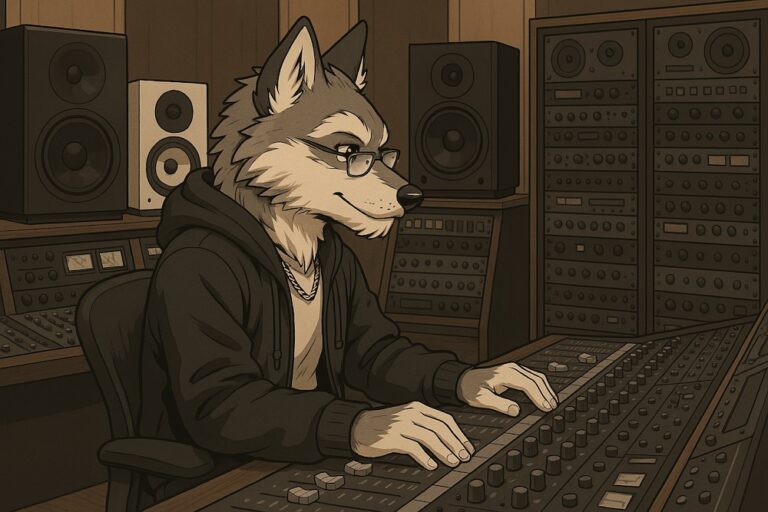
We come from a background in hip hop production, R&B, and jazz, and we bring all of that into what we make for kids. Not because we’re trying to impress other musicians, but because kids respond to good music the same way adults do. They don’t need everything pitched up and sped up and coated in sparkle sounds. Give them a solid groove with some low end, and they’ll find it.
You don’t have to overthink it
None of this means you need to turn music time into a structured learning activity. You don’t need flashcards. You don’t need to narrate what’s happening in your toddler’s prefrontal cortex while they dance in the kitchen. The best thing about music and little kids is that it just works. Put on a track with a good beat, and they’ll do the rest.
If your kid is bouncing, clapping, stomping, or doing that weird squat-bounce thing where they look like they’re about to launch into orbit, that’s development happening in real time. It just happens to look like a really good time.
Stream the full Snuggle Bunch catalog and find your kid’s new favorite groove at ffm.bio/snugglebunch.